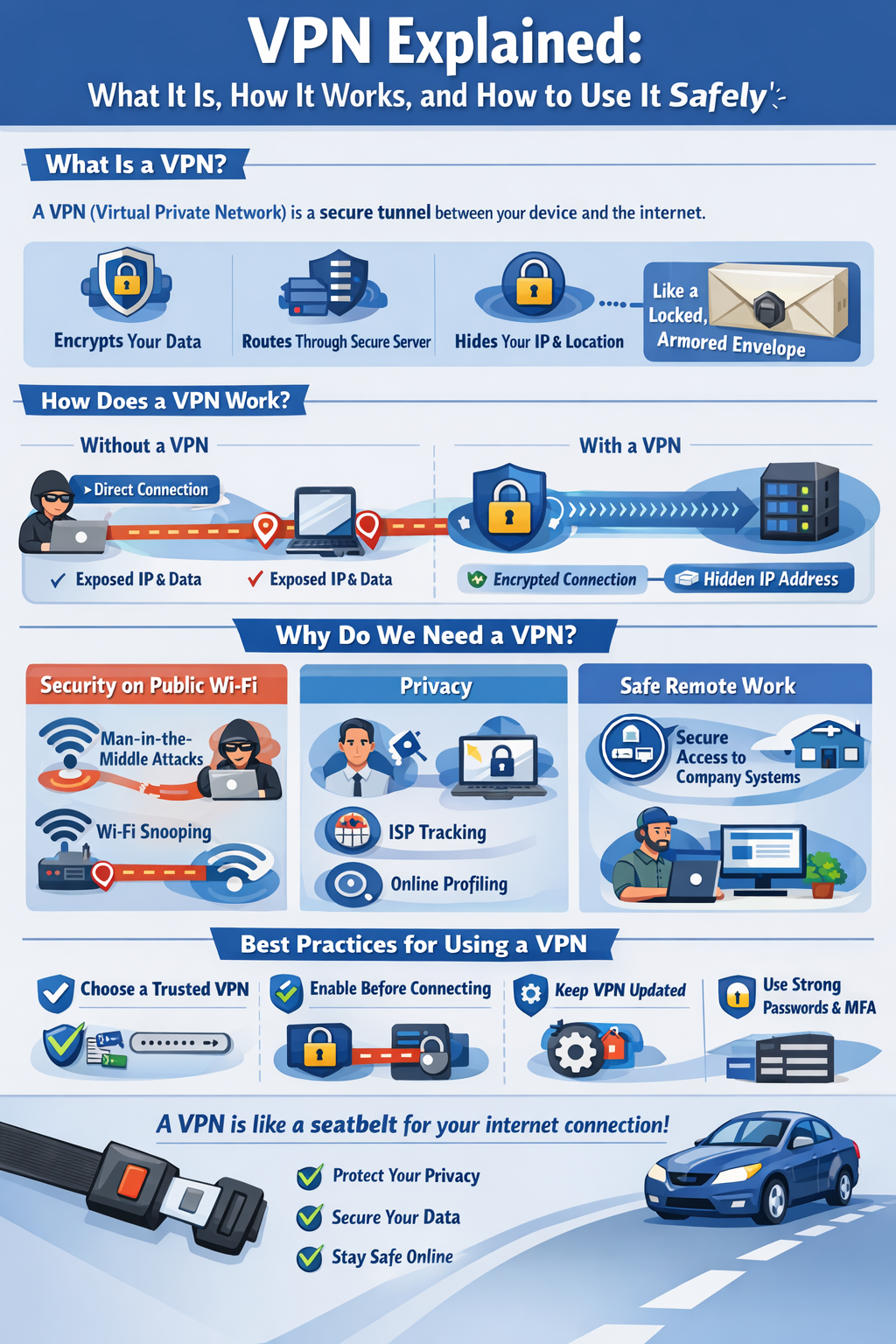
Whether you’re working remotely, traveling, or using public Wi-Fi, your internet connection can expose more information than you realize. This is where a VPN comes in — a simple tool that adds a strong layer of privacy and security to your online activity 🛡️.
🌐 What Is a VPN?
VPN stands for Virtual Private Network. It creates a secure, encrypted tunnel between your device and the internet.
Instead of connecting directly to websites and services, your traffic passes through the VPN first — hiding your real location and protecting your data from prying eyes.
⚙️ How Does a VPN Work?
When you turn on a VPN:
- Your internet traffic is encrypted 🔒
- Your IP address is hidden
- Your data is routed through a secure VPN server
- Hackers, ISPs, and snoopers see only encrypted data
Think of it as sending your data through a locked, private tunnel instead of an open highway.
🤔 Why Do You Need a VPN?
A VPN isn’t just for tech experts — it’s useful for everyday users and businesses alike.
- Protect data on public Wi-Fi (airports, cafés, hotels)
- Secure remote work connections
- Prevent tracking and data harvesting
- Add privacy when browsing
- Reduce risk of man-in-the-middle attacks
🏢 Who Benefits Most from Using a VPN?
VPNs are especially valuable for:
- Remote and hybrid workers 💼
- Small and medium businesses
- Frequent travelers ✈️
- Anyone using public or shared networks
✅ Best Practices for Using a VPN
- Use a trusted, reputable VPN provider
- Keep your VPN app updated
- Enable VPN automatically on public Wi-Fi
- Don’t rely on free VPNs for sensitive work
- Combine VPN usage with MFA and strong passwords
🧠 Final Thought
A VPN doesn’t make you invisible — but it dramatically improves your online safety. It’s one of the simplest tools you can use to protect your data in a connected world.
Need Help Choosing or Setting Up a VPN?
Andi-Tech helps individuals and businesses deploy secure, reliable VPN solutions tailored to their needs.
📧 Get in touch: info@andi-tech.com